
Pinterest, and taste as labour
The girlies yearn for Polyvore

Do you spend a lot of time on Pinterest? I do. And I’m not alone: as of January 2026, there are around 600 million active users - over 70% of them women.
Pinterest has had a reputation for scrapbooking, recipe ideas, and wedding planning since it launched in 2010. But in 2022, they introduced a standalone app called ‘Shuffles’ which allows you to stack multiple images into a single collage-style spread and share them with friends, who could ‘favourite’ them.
This is like catnip to Pinterest women. It took off.
Not because it was new. But because it was familiar. Let’s step back, shall we?
💿 Polyvore, or: pre-algorithmic taste-making
Polyvore launched in 2007 and immediately shaped the visual grammar of a generation of internet girls.
The interface was simple: a white background and access to thousands of clipped product PNGs. You’d give yourself a theme - scene, horse girl, Parisian, whatever - and go hog wild, adding a thoughtful handbag and maybe a Starbucks cup or a Lana del Rey lyric for personality and flavour.
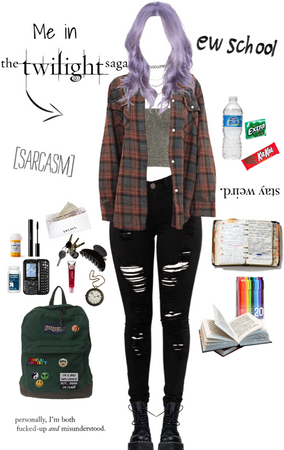
Picture this: Web 2.0/early social media was still finding its feet. Instagram was 3 years away. Teenagers - particularly losers in rural England whose nearest clothing shop was an ASDA - got their inspiration online from specific independent bloggers and fashion magazines. Polyvore (and the also-defunct Lookbook.nu) was browser-based, free, and interactive. Most importantly: you didn’t just consume fashion; you played with it.
Users clipped, curated, categorised. They built libraries of clothing items. They followed one another. They shopped from friends’ picks. In retrospect, it was a fascinating anthropological map of every subculture fashion going.
It was utterly groundbreaking.
Cut to the mid-2010s. After the heady highs of 20 million+ active users in 2012, Polyvore is suddenly fighting with new social media giants for eyeballs. Then in 2018, it is acquired by SSENSE… and then promptly killed with no warning and no attempts made to archive.
Which was like the burning of the Library of Alexandria for taste-making.
From the ashes rises a phoenix
So, we hit 2022. Pinterest quietly rolled out a “Shuffles”/collage feature. You can cut out items… layer them… add stickers… make moodboards…
The Polyvore girls wake from their slumber.
There are differences, of course. It’s less product-heavy. You can’t shop the stock as easily. But in a landscape dominated by TikTok and Instagram, which optimise for performance and speed, collages feel comparatively low-stakes, slow, and less personality-driven.
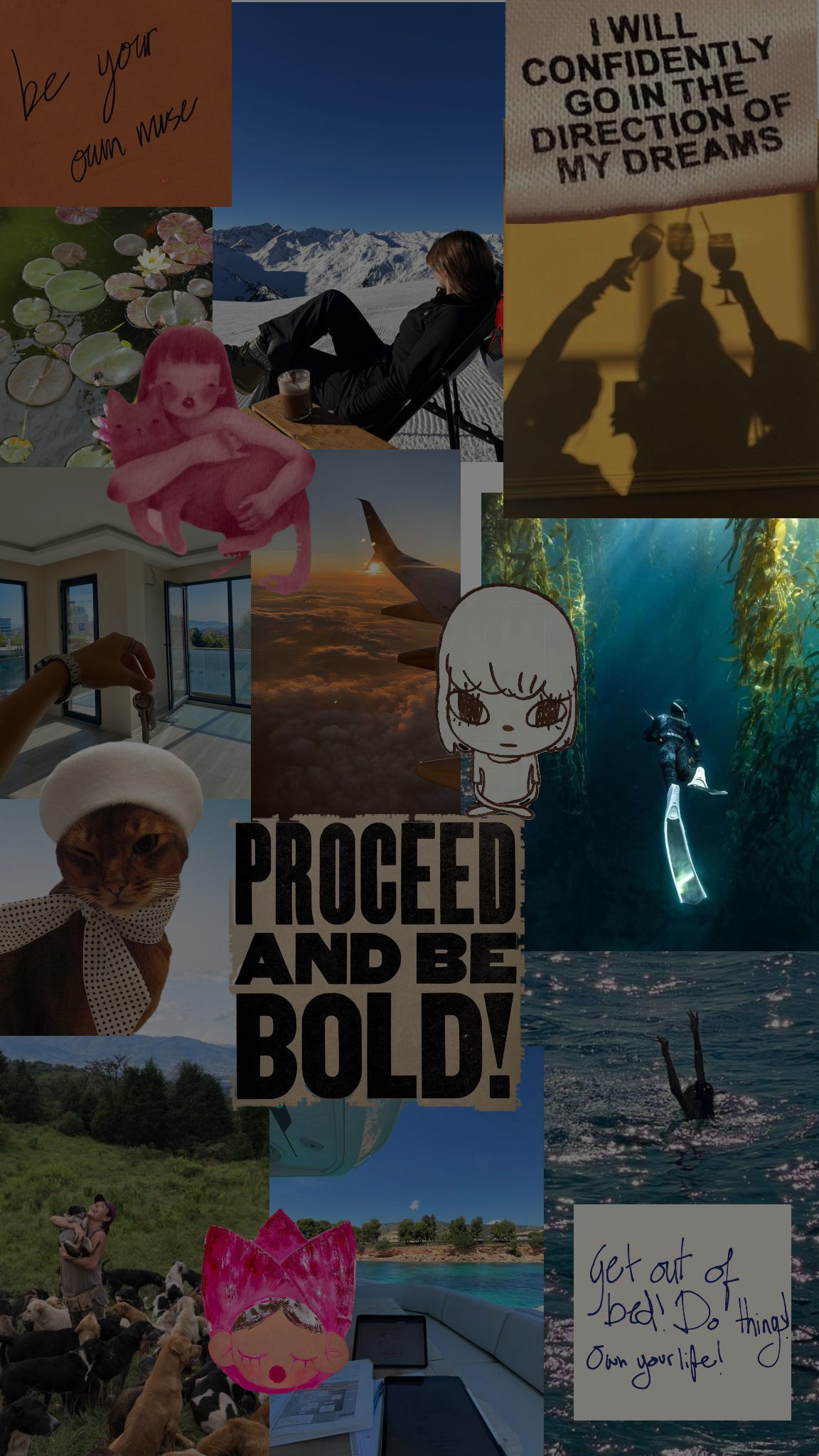
Pinterest is not radical. As with everything on this fucking Substack, it is late capitalism in a linen shirt, let’s not pretend otherwise. But these collages feel highly personal and intimate. They’re not performative, or optimised for engagement. It feels like a nostalgic return to a pre-smartphone quietude.
Which brings me to my main argument:
Taste as labour
Polyvore required from its users their time, restraint, and aesthetic coherence.
The finest Polyvore creators - like the best Tumblr curators of the time - had a strong sense of style which they stuck to. Taste was something you worked on. It was a form of self-representation built through repetition.
This is what I mean by taste as labour.
Taste as effort: selecting, rejecting, returning, staying consistent enough to be legible. You couldn’t just be grunge. You had to build it, assemble it, and prove it over time.
We’re living in an era where AI generates moodboards from referential slop; algorithms decide what visuals we see and interact with; and subcultures have been stripped of their material practices. Aesthetic identity is increasingly automated.
A culture of aesthetics (not scenes)
In her New York Times article, ‘Teen Subcultures Are Fading. Pity the Poor Kids’, Mireille Silcoff says,
“..once the poles of style and art and politics and music around which wound so many ribbons of teenage meaning [subcultures] have largely collapsed … What teenagers today are offered instead is a hyperactive landscape of so-called aesthetics … much content but little context — a lot to look at but a very thin relationship to any “real life” anything...
On one end, even a distinctly in-the-world subculture (like, say, grunge) can be reduced to a vibe packet of anodyne references (cigarettes, grimy things); on the other, a mere mood tone can be elevated to something offered as lifestyle.”
Silcoff contrasts this with an older rite of passage: getting into a scene. Hanging awkwardly around record stores, nightclubs, street corners. Learning the rules so you wouldn’t be dismissed as a poser.
By the time I discovered Polyvore in 2008, that version of scene-building had mostly disappeared (unless you count the emos around the Leeds Corn Exchange, which I don’t). But Polyvore offered a digital analogue. You still had to show your workings.
Pinterest collages reintroduce that friction. They require effort, and decision-making. In a culture that increasingly automates this kind of practice, it could almost be considered… defiant?
Pinterest is not saving culture
TO BE VERY CLEAR I do not think that Pinterest is rebuilding scenes. It has its own algorithm. It is doing a lot of the Bad Stuff here.
BUT collaging lets users construct meaning rather than simply react to it. It reintroduces a sense of authorship in a visual environment otherwise dictated by feeds, recommendations, and AI-generated sameness.
The labour is the point.
The girls are working again.
And they’re working on taste, specifically.
That’s culturally interesting.
Omg the emos around Leeds Corn Exchange 🙏🙏🙏 how I longed to cringe amongst them (I'm older than you, we barely had the internet). Another excellent post!